Furo Wariboko is a Nigerian man who wakes up Caucasian. In this situation where I would have screamed loudly yelled loudly in shock, Furo worries about how to leave his house for a job interview undetected by his family members. And so I wondered if he had a mental illness. Maybe this change from a black man to a white man is all in his head. How can anyone wake up as a person of a different race and still be concerned with making it to a job interview? I waited for him to interact with other humans so that I could gauge his mental health. Furo isn't mentally ill as far as I know. He did wake up Caucasian and after he successfully leaves his parents house undetected he never returns. Blackass is about him dealing with his transformation and taking advantage of all the opportunities that are now open to him as a white Nigerian. Even though Furo's white on the outside he's still Nigerian in all the ways that count. His feelings of inadequacy are borne from a life of academic underachievement juxtaposed with his sister's academic prowess and her constant ability to impress. He shoulders the burden and expectations that come with being a first son and he's desperate to succeed, desperate to show he won't be that man who can't provide for his family. He won't be his father.
Blackass is one of the best literary offerings from Nigeria in 2015. It shines brightly next to Chigozie Obioma's Man Booker long-listed debut, The Fishermen and E.C. Osondu's full-length novel, This House is Not For Sale. Blackass is richly layered, it's fresh and it's engaging. I flipped the pages greedily as I neared the end wondering if Igoni would give this a happy ending. He does right by leaving us where he does at the end of this tale. It's an ending that raises many questions. A. Igoni Barrett delivers everything you expect and more. If your reading list doesn't already have Blackass on it you need to pencil it in. Blackass is one of 2015's must-reads.
---- READ: Love is Power or Something Like That by A. Igoni Barrett - My Thoughts 13 Questions for A. Igoni Barrett [Image via Amazon]
Love Is Power or Something Like That is a collection of nine riveting short stories filled with many spirited characters. The collection begins with The Worst Thing That Happened followed by Dream Chasers, The Shape of a Full Circle, Something Like That, My Smelling Mouth Problem, Trophy, The Little Girl with Budding Breasts and a Bubblegum Laugh, Godspeed and Perpetua, and finally A Nairobi Story of Comings and Goings. It's a varied collection of evocative short stories, lushly detailed and well narrated by A. Igoni Barrett as though he has lived all those lives.
I love the book cover art (pictured), I love the title of the collection, I love the author photograph on the inside of the back cover, and most importantly I love these nine stories. One of them made me somewhat uncomfortable because of the subject matter but I'll let you figure out which story that is. Two of my friends took one look at the book title and immediately mistook this to be some lovey-dovey book dripping with girly romance. It's not that kind of book. I'm really, really impressed by Love Is Power or Something Like That. You should read it.
--- Here's my 2010 interview with A. Igoni Barrett: 13 Questions for A. Igoni Barrett
Igoni Barrett is the author of the short story collection, From Caves of Rotten Teeth and was previously the managing editor of Farafina, one of Nigeria’s most vibrant publishing houses. He is partnering with the Silverbird Lifestyle store to produce the BookJam series that brings together writers and their book reading audiences. The fourth edition of this event was held on the 22nd of May, 2010, had Chimamanda Adichie, Sade Adeniran, Chuma Nwokolo, and Binyavanga Wainaina in attendance as the events guest writers. Here he is in an interview with Incessant Scribble. Enjoy!
1. The BookJam events are becoming more popular among book readers. How did this series begin? The idea for the BookJam came to me during the “9 Writers, 4 Cities” book tour that I organized in 2009. The success of the tour readings, the fact that the audience responded enthusiastically to the presence on the podium of several writers from different genres and “generations”—if I may use that word—was the germ of the idea. There was also the realization that if I wanted to continue with such programmes I would as a matter of necessity have to find a sponsor who had something to gain other than the goodwill of readers. From thereon in my task was straightforward. To my mind there were only three groups I could approach with this idea: writers, publishers and booksellers. So I approached the publishers and said, ‘Look, you have produced these books and I have an idea that will help you promote them”. And to the bookseller I said, “You have this beautiful store and all these books to sell—my idea will bring in the writers to promote the books and the people to buy them up”. After I received some supportive noises from both parties, I sat down and drew up a format that I felt was best suited to achieve the goals I’d set. And christened it the BookJam.
2. Are there any plans to expand the event to other cities? Yes there are. One of the reasons I chose Silverbird to work with was because they are in the process of developing a chain of bookstores across Africa. There are ongoing plans to have BookJams in every one of the Silverbird stores. I also believe that any good idea will travel, will evolve. So it’s my hope that one day, sooner than later, universities, secondary and primary schools, libraries, book clubs, village bookshops even, across Africa, will organise their own BookJams. I also hope they will take the format and turn it into something I couldn’t have foreseen. When that happens, if it does, we can begin to talk of success.
3. With the BookJam @ Silverbird you bring writers to their readers. I find it very impressive that admission is free despite all the time and effort that must go into planning, organizing and hosting these events. Clearly Silverbird and your guest writers have been very supportive and generous. Is this trend sustainable? We would all hate to see this vehicle die out. Admission to the BookJam is free only because it doesn’t make any economic sense to charge our audience. About 70 to 100 people attend each event. What fee can we charge that number of people that isn’t too high for the average Nigerian and yet generates real money for our budgetary needs? 100 naira, 500? The 50 thousand naira we might hope to raise from a gate fee is not worth the risk of having a poorly attended event. The day we have 500 people attend the BookJam, we will consider the possibility of ticket sales.
I should also mention here that though Silverbird and the publishers and authors have indeed been very supportive, we should bear in mind that everybody gets something from this. The BookJam is not a CSR venture; it was devised as a profit-making initiative. The booksellers get publicity and sell books. Ditto the publishers. The audience gets entertained. Even I get something. I like to think of it as enlightened self-interest. As far as I know, that is the only way this sort of programme can ever be sustained—at least without NGO money.
Speaking of support: the BookJam wouldn’t be where it is today without the input of people like Anwuli Ojogwu, who moderates the programme and manages the publicity for each event through Auggust Media, and Sola Kuti of www.switchedonnaija.com, who’s the brilliant designer of the BookJam posters. And there’s QF Photos, which handles the photography for each event. Silverbird Lifestyle store is of course the Maecenas of this project: they provide the budget, the venue, the media firepower.
4. The “9 Writers 4 Cities: The Book Tour” was wonderful. Is that something we will see more of? Not in the near future. Not except some major corporation or government body decides to sponsor it. To ensure the book tour was a success all the participating writers very kindly put in their time and money, but as the initiator I had to put in more money and time than most. I’m still recovering from that. That’s not to say I regret the experience—without the “9 Writers, 4 Cities” book tour, there wouldn’t be the BookJam today.
5. Recently your short story collection, From Caves of Rotten Teeth, was published. How did it feel to be on the other side of things: sending in your manuscript, waiting for feedback, and working with editors? My book was published in 2005 and rereleased in 2008. My father, Lindsay Barrett, was the assessor, editor, and publisher. Since its publication I’ve set up an online magazine, I’ve worked as a magazine editor, as a book editor, as an organiser of literary events, as a workshop facilitator—I’ve dirtied my hands in the engine of publishing, so to speak. Whatever feelings I had at the time have been superseded by the realities of the publishing landscape in my beloved country.
6. No doubt you get the “How do I get published?” question a lot. What is your response now based on your personal and professional experiences? Should writers just mail in unsolicited manuscripts? What steps should unpublished writers take? This advice won’t work for everyone, but it worked for me and many other writers I know. Prove yourself; send your work—short stories, novel excerpts, and poems— to literary magazines, online and print, renowned or obscure. When you get published it builds your confidence, and your résumé.
7. There are many Nigerian authors making their debut on the literary scene. Do you think a lot of these new titles will be read many years from now? Is the quality of work improving or do we still have a lot of work to do in the way we tell our stories? A few of these books will become canonical, and many won’t. It’s the way of the world. The number of writers producing quality work as has undoubtedly increased, as has the number of writers producing forgettable material. There’s always more work to be done.
8. Self-publishing is a route a lot of people take for varied reasons in their bid to get their books out to an audience. What are your views on self-publishing? It’s a problematic route. The majority of writers who choose that option are not quite ready to face the rigour of the intelligent reader, and even when a talented writer self-publishes, he or she is most times denied the processes that are required to produce a well-finished book.
9. Have we progressed to the point where writers can live off proceeds and royalty from their literary works? We don’t need to “progress” to that point—it has always been there, even in the times of the griots and the renaissance poet-dramatists. But same as in any other worldly enterprise, the summit is only meant for a few. There are only a small number of writers who can live comfortably off the proceeds of their art. The rest of us can either look and envy, or strive and hope for a bit of luck.
10. What steps are being taken by the industry to combat piracy? Wider distribution. Better promotion. Lower prices. It will be a long and dirty fight, and in this one the good guys, unfortunately, are not promised victory.
11. What do you think the Nigerian publishing industry and our indigenous writers need the most? One area where I think the publishing industry needs support is in the provision of basic infrastructure. Better roads, better schools, constant power—the issues faced by every business in Nigeria. As a writer, I would be happy to have some local writers’ retreat where I could live and write for many months without worrying about where the next meal will come from. But that’s just me.
12. Most times readers complain about how hard it is to find Nigerian titles. A lot of the time these books are available only in the big book stores, which is not where the bulk of our audience is. Why don’t publishing houses have a larger network of stores they distribute to so that the common man on the street who can’t drive to the fancy stores in Lekki, Ikoyi and other affluent areas, will have access to these books? The publisher’s primary task is to produce books. The bookseller’s job is to sell them. In the UK, Random House doesn’t sell books, WH Smith does. So the question shouldn’t be directed at Nigerian publishers, who’ve done their job. It should be directed at the bookshops in Ajegunle and Borokiri and Gusau, which have refused to seek out the books, to order and stock them. As a book buyer, I’ve asked. The answer I get most times is that there aren’t enough readers amongst “the common man on the street” to make it worthwhile for them to stock anything other than the fastest-selling educational and religious titles.
13. What’s your favorite way to unwind after a long hard day? Reading.
From Caves of Rotten Teeth by A. Igoni Barrett is a collection of short stories that was first published in Nigeria in November 2005. The Orange Prize-shortlisted author Laura Hird described the book as 'a brilliant debut collection' and in an interview with the literary magazine Pulp.Net named 'The Phoenix', a short story in the collection, as one of the best stories she had ever read. 'The Phoenix' won the 2005 BBC World Service short story competition.
The fourteen stories in this edition of From Caves of Rotten Teeth (five of which did not appear in the first edition) deal with circumstances that reflect the day-to-day existence of modern African life. Although the stories may at times seem surreal the reader will recognize the truthfulness and realism with which they delve into the lives of their characters. The author has an uncanny eye for detail and a deadly accurate, though sometimes satirical, ear. With these stories he has achieved a vision that is both lighthearted and profound.
Praise for the second edition of From Caves of Rotten Teeth
'In this collection, Barrett entrances the reader with his lush language and imagery that brings the essence of struggle alive…the effect on the reader's imagination will last for a very long time' —Uzodinma Iweala, author of Beasts of NoNation
'A. Igoni Barrett's prose captures, with enviable depth, the emotions and circumstances of his characters…from addiction to everyday survival, these stories are delivered with sincerity'
— Kaine Agary, author of Yellow Yellow
'These stories share the same beauty of language, the same keen sense of observation…reading the collection is a journey into a world that is sometimes humorous, but very often a reminder of all that is wrong in our world.'
—Chika Unigwe, author of The Phoenix
The book is also available from the following places from Kachifo Limited, Glendora/Jazzhole, and Onyoma Research Publications, Victoria Island, Lagos (Call: +234-807-763-8752), Quintescence, on Awolowo Road, and Terra Kulture, Victoria Island, Lagos. Visit here and here for more information.
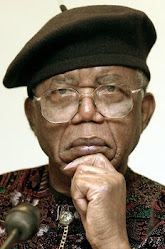
I began reading Achebe when I was a child. Long before I had any idea who he really was and what he represents to Nigerians and readers worldwide. We had this old carton box filled with children's books including my first Achebe books, "The Drum" and "The Flute", both of which I read many times over. Chinua Achebe is inspiring. He's incomparable. A true master of his craft. [Photo: Frank May/AFP/Getty Images]
Sidney Sheldon
For a long time back when I was younger I'm embarrassed to admit that I assumed this author was a woman. I never bothered to check. Sheldon's books and it's strong female protagonists were just soo good it never crossed my mind that a man could write it. When I did discover Sidney was a "he" it made me an even bigger fan. Sheldon's witty, strong willed, smart heroines are an engaging read. His death is a huge loss. [Photo: Tim Boyle/Getty Images]
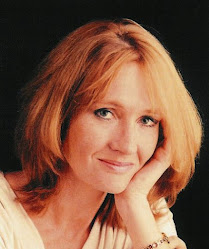
Joanne Kathleen Rowling
I can't even explain how much the Harry Potter series mean to me. Anyone who knows me has heard me gush about Rowling's Harry Potter books over and over and over again. I don't think she gets enough credit for what she has done for literature or for the mind-blowing talent it takes to create an entirely different world. The Harry Potter books were my first literary obsession. [Photo: Scholastic]
Chimamanda Ngozi Adichie
I still have the newspaper clippings from the July 11, 2004 Sunday Edition of the Nigerian Guardian that I cut out when I first saw Adichie's interview for her debut novel "Purple Hibiscus". I finally got to read "Purple Hibiscus" in 2007 and I finished reading it on the University of Nigeria Shuttle bus headed back to the Nsukka campus from Enugu. I sat in that bus quietly after I had finished reading it, deeply moved by everything I had read and in awe of Adichie. In 2008, my friends (Onyeka Nwelue & Eromo Egbejule) and I walked around the University of Nigeria Nsukka campus searching for the house she and Chinua Achebe once lived in. We found it and we all wrote about our experience individually (for my version of the trip search this blog for "305 Marguerite Cartwright Avenue, University of Nigeria Nsukka"). Adichie represents many things to me. She's incredibly gifted and tremendously inspiring. [Photo: Kachifo Limited]
"Also, [Nigerians] have a different mentality. Once someone deviates from the 'Go to School - Get a Job - Get a Family' model, he is seen as a delusional fool who is certain to fail and is discouraged at every turn. How is one supposed to make art under such conditions?" - Onyeka Nwelue
"I don't speak to provoke. I speak because I think our time on earth is short and each moment that we are not our truest selves, each moment we pretend to be what we are not, each moment we say what we do not mean because we imagine that is what somebody wants us to say, then we are wasting our time on earth." - Chimamanda Ngozi Adichie
"It is precisely because there are so few novels by African writers in global circulation that we ask those novels to do too much. No one novelist can bear the burden of representing a continent and no one novel should have to." - Taiye Selasi
Behold the Dreamers, 2016, Imbolo Mbue ****
-
Jende Jonga has finally made it to the USA, and after months apart, he's
able to bring his wife and son over to join him. The question that drives
this no...
Dominion by Addie Citchens
-
Date Read: April 30th 2026 Published: August 2025 Publisher: Farrar, Straus
and Giroux Pages: 240 The Blurb Reverend Sabre Winfrey, Jr., shepherd of
the Se...
Africa Writes – Exeter 2024 Programme
-
7 – 9 June 2024 www.africawrites.org/exeter/ Join us in celebrating
literature, thought and culture from Africa and the African diaspora at
Africa Write...
Alex Kadiri wins Afritondo Short Story Prize 2023.
-
Alex Kadiri has been named the winner of the Afritondo Short Story Prize
2023 today, Friday, April 7, 2023. Afritondo, a platform that aims to
connect wi...
I Visited the Yemisi Shyllon Museum of Art
-
The Yemisi Shyllon Museum of Art sits conspicuously in the compound of the
Pan-Atlantic University. In the surrounding aura of scholarship, it appears
rath...
The Black Sheep Podcast
-
#10 Sarah Ladipo Manyika on Finding your Artist Fairy Godparent Writer and
artist Sarah Ladipo Manyika grew up between Britain and Nigeria, where she
was ...
Before You Send Out Your Manuscript
-
Dear Writer, Writing is an act of self-exploration and submitting your work
to a publisher can be the scariest act of your life. As publishers, we are
awar...
“A Good Husband” by Ruth Mukwana
-
“So when is this boy of yours planning to make a good woman out of you?” Ma
asked, her eyes full of light. A maid brought us a flask of tea
a...

 Furo Wariboko is a Nigerian man who wakes up Caucasian. In this situation where I would have





 Posts
Posts