December 24, 2008

CNN HEROES - Ordinary People Extraordinary Impact

I just finished watching the show CNN HEROES and knew I had to blog about it. Only yesterday during my blog rounds I went to Happenings and she was asking when to give and under what circumstances one should give people money. I left a comment after reading her post saying it’s hard to discern “truly needy” people from amongst the many beggars we see around us because there are many con men and women out there on the streets interested in ripping off generous people. My Nigerian readers will understand what I mean. We are approached by them when we walk the streets, when we wait at bus stops, when we are stuck in traffic (go-slow) etcetera; they beg us for alms even though they look physically OK.

Anyway, CNN HEROES is an inspiring award show that honours everyday people who make effort – no matter how “tiny” or small scale it may seem, to help lessen or alleviate the suffering of their fellow humans. These Heroes help, inspire and motivate “truly needy” people. It’s impossible to decide which Hero's account is most inspiring. All the personal accounts were fantastic, moving, wonderful and so, so inspiring. Just watching the well made video clips showing these Heroes at work can make anyone leak from the eyes. The humble acceptance speeches given by the award recipients were equally moving. They are simply everyday people compassionate and bold enough to reach out and help those around or far away from them. They are simply everyday people who are being honoured and recognized by the people around them(each award recipient won $25,000 while the CNN HERO of the Year, Liz McCartney won $100,000). That’s something Nigerians and citizens of other countries should emulate, recognizing the Heroes amongst us.

Visit CNN Heroes for the moving accounts and an overview of the celebrity studded award night.

December 16, 2008

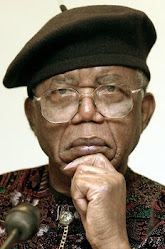
Second-Class Citizen by Buchi Emecheta | Book Review

Right from the first page of “Second-Class Citizen” the reader is lead into to Adah’s childhood and the beginning of her dream to succeed in life, her dream to become a "big" person. Nudged persistently by this dream, she is determined to get an education even though it's a privilege given mostly to male children. She overcomes her mother's opposition and never stops learning. Because girl teenagers were not allowed to live by themselves in Lagos, Adah decides to marry. And there the novel begins proper. She marries Francis who is studying to be an accountant and with him come controlling in-laws. She breaks free when she runs to the United Kingdom with her two children to join Francis. Francis doesn’t help her absorb the initial shock caused by her new surroundings, but coldly tells her that from that day onward she must recognize the fact that she's a second-class citizen. Settling down in London, she becomes conscious of her skin colour and discovers that it is a big deal to be a black person in the midst of white people. After resisting strongly and being angry with her husband for accepting and enjoying the label 'inferior', she very slowly becomes conditioned to expect inferior things.

Racial discrimination confronts her when they are rejected by the white landlady of a derelict house after they are kicked out of their former apartment by jealous neigbours from her home country. The rejection is devastating and Buchi doesn’t over-dramatize the incident or the after effect which is stinging, bitter and humiliating. For millions of Africans who haven’t left the continent, the word ‘racism’ cannot be fully understood. In actuality, racism is a word whose concept can only fully be understood by those who have experienced it first-hand. It’s why Barack Hussein Obama’s victory means a lot to the African-Americans and other minority groups living in the United States and the world over, it's why Jesse Jackson wept...

Adah sees the real Francis now – a lazy, manipulative Jehovah’s Witness with double standards. He preaches a lot of the things he does not practice and does a lot of things true Jehovah’s Witnesses would never do. For Adah, it’s a case of ‘Monkey dey work, Baboon dey chop'. From the moment she arrives, every convenience her family enjoys is as a result of her persistence and hard work. Second-Class Citizen reminds the reader of The Joys of Motherhood, another of Buchi’s books, where the protagonist faces the problems typical of mothers in the Nigerian society (Second-Class Citizen was written before The Joys of Motherhood). Adah wants to break free from “slavery” under Francis, but she never quite gets to it until the end of the book.

Buchi's protagonist uses the stories, parables and scriptures from the Bible to draw analogies and sometimes rationalize situations, but not in a way many people will be comfortable with. Like in Half of a Yellow Sun by Chimamanda Adichie, Buchi gives a background picture of a period in the history of Nigeria, the years before our independence when well educated men with good secondary schooling or its equivalent rushed out of the country to get quick degrees in anticipation of a period when they would come back to rule their own country . Second-Class Citizen reminds the prolific reader of Unbridled by Jude Dibia. Both Adah and Unbridled’s protagonist Ngozi, are women with not-so-good childhoods who grow up, suffer harsh domination by their men and then break free after enduring too much. Jude Dibia leaves Ngozi in much better shape than Buchi Emecheta leaves Adah – in front of a butcher's shop, not buying any meat but feeling hungry, tired and sick. She's also crying. The diction of Second-Class Citizen is good without being wordy. It’s Nigerian too, the way her characters reason and act. Buchi writes strongly in a way that makes it seem she’s dealing with the very familiar. She also has a very good sense of humour. Second-Class Citizen is an enjoyable and thought provoking novel.

[Image via KinnaReads]

December 11, 2008

December the 13th: Farafina Magazine Event


For more information about the Farafina Magazine Event visit their blog or their Facebook page.

December 05, 2008

Farafina Magazine's Visual Arts and Literature Event


For more information about the Farafina magazine event and biographies of the featured artists, visit their blog

October 29, 2008

Farafina Magazine- Latest Issue


Dear Readers,

The latest issue of Farafina Magazine will soon be out. For those of you who are not very familiar with Farafina Magazine , it was started in 2004 as an online magazine. It was in this original incarnation that the magazine established contact with contemporary writers based in Nigeria and overseas, publishing the early work of such writers as Chimamanda Ngozi Adichie, Sefi Atta, Petina Gappah, Tolu Ogunlesi, Yemisi Ogbe and Victor Ehikhamenor.

The first issue of the print magazine was published in October of 2005. It is a bimonthly publication. The magazine is dedicated to the best in contemporary ideas; it is intelligent without being pompous, well researched without being academic and opinionated without being pedantic. The magazine publishes everything from photo essays to cartoons, art interviews to political exposes, narrative essays to short stories. You can purchase your own copy of this magazine at the following outlets -


Quintessence

Falomo Shopping Complex,

Awolowo Road, Ikoyi,

Lagos


Bookworm

Adeola Odeku street,

Victoria Island,

Lagos


Total Bonjour

Lekki-Epe Expressway

Beside The Palms Shopping Complex,

Lagos.


For more information about the magazine and the closest sales outlet to you, visit their website here.

October 28, 2008

Bad Day

       ‘Thank you.’
I shut the car door and waited until Ebenezer’s car reached the filling station and then I turned and walked into the University campus. I pass the Kwame Nkrumah hostel and the new Odili hostel. I can see the progress made by the site workers but I can’t admire it. Why is life so short? I’m not alive today because I’m more religious than any of the people who left this world last month or because I pray more regularly than they did when they were alive or because I’m a better husband or because I have used my life in a better way than they did or because my family loves me more and that love protects me from death. I’m alive today not by any design of mine. Every day millions of lives are extinguished. The life just goes. People just stop existing. I sigh heavily. How, how do I tell Gloria that Chinedu is dead? “Gloria…your brother is dead.”, “Gloria…someone died this afternoon…Who?...Chinedu.” Gloria will die.
       Ngozi’s call this afternoon left me stiff with shock. She was crying so much that I could not hear what she was saying. The only word I heard clearly was ‘dead’ and I knew immediately without hearing her say it, the one who was dead. I tried to calm her down by saying all the meaningless words my mind put in my mouth, while trying to pull myself together as a man must. Her sister took the phone from her and told me what had happened as told by the people who took Chinedu to the mortuary. His head had burst open after he fell down from the speeding Okada. When they got to the accident scene, the afternoon rain was rinsing his red blood from the black tar. I shut my eyes to remove the images that came to my mind but it was as if I shut the images inside. I opened my eyes quickly.
      On my left, in the field behind the Eni Njoku hostel, someone was learning to drive. The car went around the field once and then it stopped and the occupants discussed. Is life like that? A circle? Humans are born, they grow up and learn to bear the problems that come with life, they procreate and then they die leaving children who inevitably, go through the same process. In the other field some children were playing football in spite of the cold weather. Suddenly rain started falling even though the sun was still shining and then just as suddenly it stopped. I turned left into the road that leads to the University Junior Staff Quarters.
     Chinedu was Gloria’s only brother, only sibling, only blood relative. Their parents had died when they were young. He had struggled to put food on the table and to put her through nursing school. In her words “He put his life on hold, so I could go to school. During that time, nothing personal mattered. He broke his back so I could go to school.” She was always saying it, always. He’s someone she loves deeply. So how can he be dead? Chinedu? The one that is marrying Ngozi next month? The one that drank beer with me four nights ago at Jives? The one that Ngozi kept saying was ‘overdue’ for marriage? The one that told me four nights ago that Ngozi is carrying his baby? The smiling one. I was cold to the bone and the cold weather was not helping.
     I turn left, pass the quiet house of my neighbour and walk to my door. On the pavement my son Chike stands bare-chested, holding his hands out to catch the rain water running down the zinc roof. He greets me and I nod and begin to take off my shoes. He pinches one nostril shut and blows hard. A tiny glob of mucus shoots out his nostril and lands on the floor. It’s so clear; it could have been mistaken for a rain drop.
     'Why aren’t you wearing a shirt?’
     'The weather was hot before the rain started.’ He replies without looking at me. ‘I’m not feeling cold.’
    ‘Come on get inside the house and wear a shirt!’ He picks the clothes on the bench outside and goes behind the house. No one is in the sitting room. I sit heavily in the chair and put my feet on the low table in the centre of the small room. I shift my weight to one leg and bring out money from the back pocket of my trousers. One twenty, two fifties and a five naira note. I drop it on the table and sit staring at my toes. Kenechukwu, my four year old, comes into the parlour.
     ‘How are you?’
     ‘Fine.’ He says softly. I pick him up and lay him on my chest. His skin smells clean as if he has just been given a bath. I kiss his cheek and he inspects my face and then my throat. He fondles my Adam’s apple with tired fingers, and before I can complain he stops. He puts his head on my chest and pulls gently on the collar of my shirt. His twin sister, Chizoba breezes into the sitting room and makes a beeline for my newspaper. She opens it on the center table and begins flipping pages. Kenechukwu’s sleepy eyes flutter open whenever she squeals or turns the pages of the paper loudly. She calls my name, and points to a Bournvita advertisement. I nod. She eyes me, and continues turning pages. I close my eyes. Kenechukwu’s body is warming me. I stretch out a little so his full weight is on my chest. I shut my eyes for about ten minutes enjoying the warmth from his body and silently marveling at the way his heart beats. My younger sister comes in and carries Kene into the room. I want to tell her to leave him but I don’t. Now I’m cold. I turn to Chizoba and see she’s staring at me. I stare back, and she returns her attention to the newspaper. I’m still watching her when she reaches the Obituary notices. She stares silently, solemnly at the pictures of the deceased as though she understands. I beckon to her, and she comes to sit on my lap, playing with her fingers. I try to make her lie on my chest but she struggles to get away.
     ‘I’m not a baby.’ She says firmly, and then she enters the room.
     ‘Nneka.’ I call out. My sister comes to the parlour from the kitchen. ‘Kedu?’
     ‘I’m fine. I went to school this morning because I heard the admission list was out. My name is on the list.’
     ‘Oh…that’s good. Thank God.’ I manage a smile.
     ‘Thank you. Should I make garri for you?’ I shake my head and she leaves the sitting room. I have no appetite. Most of the money I bring home monthly comes from my shed in the market where I sell books. Since the University students went on break two months ago, business has been very poor. Gloria and I are Chinedu's only existing relatives. That means all the money for Chinedu's burial will come from my pocket. Since Nneka has gotten admission, and school will resume next month for my children, I need money badly. I’m tired and would like to sleep but I want to be awake when Gloria returns. I dread her return, I dread the moment she discovers her beloved brother is lying in the Nsukka Mortuary.
      I woke from troubled sleep with a start. Gloria is standing in front of me, straddling Chizoba on her left hip. It was her that woke me up. She looks at me with concern. I wipe my eyes and my hands become wet.
     ‘Dim.’She says softly.
     ‘Welcome. How was work?’ I ask her. She nods.
     ‘I have good news. You don’t look alright.’ I stand up, hug her tightly then pull her towards our bedroom. She stops at the door and puts Chizoba down. Chizoba begins to cry.
     ‘Go and collect sugarcane from Nneka.’ She pushes Chizo gently towards the kitchen and calls out to Nneka. “Biko wash the sugarcane and give Chizo half of one…ngwa go.’ She shuts the door and begins to change her clothes. I still don’t know how to tell her.
     ‘Ben, is something bothering you? You’re making me uncomfortable.’ She cocks her head to the left and starts to take off her earring.
    ‘What’s the good news?’ I ask to buy time.
    ‘When the new academic session resumes, Mrs. Eke won’t be with us at the University Medical Center anymore. She’s going to work at the new Primary Health Care Centre in Enugu-Ezike. You know what that means okwia?’ She asks. I nod. Eke is Head nurse and Gloria is under her. That would mean more money. She turns to face me after tying her wrapper above her breasts. ‘What is wrong? What is the problem?’
     ‘Gloria…I don’t know how to tell you…I have bad news.’ She stares at me nervously. ‘Nkem. Chinedu is dead. He died this afternoon. He was knocked down by a truck as he was trying to maneuver his machine at Opi Junction. I’m sorry...’ She is staring into my eyes. I go closer. She’s standing so still I’m scared. Her eyes begin to cloud. They leave my face and stare outside through the blinds.
     ‘It’s not possible…I’ve told him…who told you?’ She doesn’t look at me.
     ‘Ngozi. She called in the afternoon.’
     ‘It’s not true.’ She says. ‘It can’t be true.’ She shakes her head from left to right, causing tear drops to fall. ‘Ben…’ Her lips are trembling as she stares at me. I put my arms around her and she continues to stare out the window. ‘No!’ She screams all of a sudden. ‘No! God! God please! Please, please. Please not Chinedu, biko. Biko, Chi’m. Biko.’ She shudders violently. Someone knocks.
     ‘Go away!’
Gloria starts hitting her head on my chest repeatedly. I put my hand on her head. ‘Nkem, please…’ Her sobs are becoming louder. ‘Nkem’
     ‘Noooo! Noooo!’ She’s screaming. I hear voices and I look out the window and see that our neighbours outside. There’s a loud knock on our room door.
     ‘Brother, what is it? ‘ Nneka asks fearfully. Gloria slumps suddenly and her full weight is upon me. I move back and throw open the door. There are some neighbours in my living room.
     ‘Water! BRING WATER!’

September 22, 2008

New Neighbours

The arrival of new neighbours can "electrify" an old neighborhood. The anticipation heralding the moving in of the Ukachukwu family to the new house next to mine was nothing I had seen since we moved into the neigbourhood many years ago. In my house, we were curious about the people who had bought the large piece of land adjacent to ours. It was not the last plot to be sold on the street but they were the last people on the street to move in. They moved in during long vac (long vacation in case you're confused) last year. For little over a year work had been going on their house. The design of the house is magnificent. On completion, it became the only house on three streets that looked better than ours. It did not dwarf our six bedroom house- complete with boy’s quarters and a gatehouse, it just made it look a little old. The good colour combination of light yellow and chocolate brown and the large well kept lawn in front of the house made it exceptional and quite modern. Before they arrived, the only info on the neighbourhood grapevine was that the owner of the house worked in Shell, nothing more.

After they moved in, I noticed something about the new family on our street (the street was named after us because we were the first land owners to move in). They are – in my opinion, the epitome of what I will call “new wealth”. They showed us that it was no longer in vogue for rich people to be “big” (I mean fat, but I prefer to use big). Whereas my father is big and potbellied, the man of the house is fit and smart looking. My mother is big too; the woman of the house is slender and young-looking. It occurred to me that we were living in the past, the period of time when corpulence went with having a lot of money. It no longer does. The kids are polite, nice and very free with other neigbours even the ones who live in the buildings with many flats. We are loud, flashy and maybe just a little bit rude to everyone. Most of our associates live in their own homes- duplexes and I don’t think it’s a coincidence. Very much later, in the December of last year, we noticed that they invited all and sundry to their house for a neigbourhood end-of-the-year party, a first in the neighborhood. A first maybe because the families in the neigbourhood who have the means, do not do it. The Ukachukwu's also let the less privileged people from far away, fetch water from their compound. We stopped doing that long ago because these people are often noisy and destructive. I asked my sister if she noticed they were different…somehow. She dismissed my comparison with a wave. "They’re probably one of these families who recently got money and don't know the behaviour that follows the status." I wasn’t satisfied with her explanation.

We went over later to welcome the Ukachukwus' to the neighbourhood, something we had not done with the other neighbours. We all went over, propelled by curiousity instead of neighbourly feeling. We had never welcomed any of the other neighbours who moved in after us. I don’t know what my family members had in mind, but I have to admit I was curious and determined to find a fault. Their parents seemed to be using the same family plan as my parents. With the exemption of my elder brother- who’s pursuing a master’s degree in Engineering in Spain, my elder sister is of the same age with Ada, their first. Their second daughter, Nkechi is my age and their last daughter is two years younger than my little brother, Chidi.

My sister proclaimed the first daughter alright by her standards. My brother seemed to like the little girl but was afraid to show it for fear we would tease him. Nkechi had a respectable DVD collection, including various seasons of Gossip girl, America’s Next Top Model and Desperate Housewives. There was a neat stack of magazines too, Teen VOGUE, Reader’s Digest, People, Ebony. Still not wanting to see good, I took Ada’s explanation for their behaviour and waited for Dad to prove us wrong. He did. His chat with the man of the house revealed that they had been in money for a long time. Nkechi and her sisters had been born with silver spoons.

The Sunday after they arrived, they came to our place of worship and coincidentally sat in front of us. When we were standing to sing, my eyes strayed to stare at five perfect butts. Usually my family members and I sing our hymns in low voices. It was an unspoken culture until that day… the day Mum broke all the rules. She sang loudly and moved her body to the beat of the Igbo worship song. I was very very surprised. Her voice was loud and to be sincere, not...so...melodious. I wanted to ask her to stop for her sake, for our sake. I noticed the reason for her change in behaviour. Mrs. Ukachukwu was singing beautifully and moving her body gracefully like other women around. Mum had the moves, but not the voice. She however refused to let that ostensible flaw prevent her from singing praises to God Almighty very loudly, and so she sang and shook with great enthusiasm. Very often, she would hit a note that did not suit her voice. I avoided the eyes of my siblings and stared unseeing into my song book. I had never seen my mother behave this way. It was disconcerting. I did not stare at her or my elder sister and father because it would confirm the oddity to everyone else watching us. I sensed most of them staring and murmuring at this new development. We are well known but it’s not for things like this. My little brother wanted to laugh at Mum’s loud squeaky voice, I could sense it. Despite my embarrassment, I had wanted to laugh too. I knew that once my eyes met with those of my little brother, he would lose control and so I gritted my teeth, kept my eyes on my book and my foot hovering over his own in case he lost it. I took his hand so he could squeeze it whenever he felt the urge. At the end of the singing, my left hand was numb. I wanted to laugh. I accepted our fate in silence. Much later, to my great discomfort I noticed that my Enyinnaya was staring at Nkechi. Enyinnaya and I weren’t going out at the time, but I had my eye on him and that fact made him mine. Was it because Nkechi’s breasts were fully out and mine were not at the time? After the service most of the friends we chat with, went over to greet the new family. We drove home earlier than usual that day. As dad reversed the car, Chidi played with the bulletin and Ada hummed Beyonce's Irreplaceable. I stared out the car window at the Ukachukwu’s , who were smiling graciously and accepting welcomes from everyone. I knew mum was staring at them too from behind her dark sunshades.

My parents made the helps clean one of the spare rooms on the ground floor of our house and they converted it into a gym. Dad bought an AB Pro exercise machine, a treadmill, a skipping rope and another exercise thing that looks like a bike but takes you no where. My Dad would do one or two rounds and then stop, exhausted. Mum still does her exercise with the dedication people give to a worthy cause. Before long, she discarded her glasses and got contacts like Mrs. Ukachukwu’s honey coloured ones and then a special cream to remove the dark line her glasses had left on both sides of her face.

They affected us, I have to admit. Later I swallowed my huge pride and went closer to Nkechi. She’s smart and intelligent. She attends a secondary school in Abuja for privileged children. She opened a blog like gossip girl and she posts regularly for her school mates to read. I went there and read all fifty two entries and I was impressed. She narrates well and adds a touch of humour. Her profile views are really high. She doesn’t do gossip in that nasty way that annoys and ruins people's reputations. I can’t give you her blog address because you won’t understand the gist and secondly, I don’t want to disclose our identities. This post won’t help my public image that’s why I used the blog name BLACK INK instead of my real name. I ‘googled’ Nkechi's blog and she had many listings. I was kind of envious that GOOGLE, the world’s best and most famous search engine lists her blog (it hasn’t listed mine yet). Maybe I’m here for all the wrong reasons, but I’m here and I will unabashedly admit that I need you to like me. I also admit I began blogging because of Nkechi. I have decided gossip is not really for me. BLANK INK will be my online diary. Thanks for stopping by to read my first post. I want you to do me a tiny favour. I need you to comment on this post. I would love to see at least ten comments for this post. I'm not asking or demanding for your comments, I'm begging for them. Any thought would do - nice, sarcastic, indifferent, flattering, anything. Even if one person takes the time to comment ten times, I would love the gesture. I have shared something with you, and I need you to share your thoughts with me. It's only fair.


Posted by BLACK INK 8:18 AM Click here to leave a comment

September 21, 2008

Dear God

Dear God,
       My name is Micah Ibe and I am seven years old. I know you already know that, my mummy and daddy say you know EVERYTHING and you can see EVERYTHING. Mummy and Daddy say I should pray to you and I have but I want to write a letter to you. I don’t know how I will send it to you, but I’ll ask Mummy, she will know. My purpose of writing this letter is to say “Hi” and to thank you for everything you have done for me.
       I’m okay, Chibuzo and Rose are fine too. Daddy says my dead cousin, James has gone to heaven to meet you. Please tell him that I miss him very very very much and I will not forget that time we went to the bar beach together. Please tell him his parents miss him too and I saw his mummy crying even though she pretended not to when I entered the parlour. Please make our dog Bingo find his way home and don’t let any motor jam him. God, I have a question. Mummy said I should ask Mr. Afolabi, my science teacher, but I want to ask you first. How does water enter the sky? What makes the sound of thunder? How did you make breeze? How is it that every body’s face look different even though everybody has the same thing on their face(I mean eyes, ear, nose and mouth)? How do babies come? I asked mummy that one but she looked at me somehow. Rose says these are stupid questions but I really want to know the answer. Please help me to stop peeing on the bed, I can’t do it alone. Rose laughs at me everytime. Please help me to stop being afraid of rats too. Please protect my family so nobody dies again. Please help daddy get promoted at work, he talks about it everytime and prays about it in the morning during devotion. I really hope this gets to you. How will you reply? I'll ask mummy.

Yours sincerely,
Micah

September 17, 2008

The God of Small Things by Arundhati Roy - My Thoughts

Powerful prose, compelling descriptions, terrific story. This tale of forbidden love and shattered lives is told very well. With great care and attention to detail, Arundhati describes their lives in rich colour. The ending - which is really how it all began - is enthralling, touching and heartbreaking, I had to read the last two chapters again. Arundhati Roy is tremendously gifted in the art of storytelling. I have never seen this style of writing before now. The God of Small Things is a wonderful debut novel.

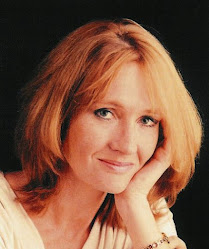
[Image via Vogue India]

The Joys of Motherhood by Buchi Emecheta- My Thoughts

Buchi Emecheta's book is rich and touching. Her dedication of the book to all mothers is apt as she shows deep understanding of native traditions and compassionately but strongly handles the issue of 'mothering' children in a Nigerian household. Her characters are well formed, realistic too. I just kept turning pages till I reached the sad end. It's a magnificent book, an entertaining read.