Sarah Ladipo Manyika, author of the novel "In Dependence", was raised in Nigeria and has lived in France, England and Kenya. She has written essays, short stories, book reviews and academic papers some of which have been published. "In Dependence" is her first book and she has gained fans with this touching love story. Here she is in an interview she granted Incessant Scribble. Enjoy!
1. How long did it take you to write this book and get it published?
SLM: It took me several years to write the novel and about two years to find a publisher.
2. Is there a bit of you in this story?
SLM: In Dependence has an autobiographical base only to the extent that I am familiar with the places that I describe. The characters and the story are made up, although, of course there will inevitably be autobiographical elements in characters that are often an amalgam of people that I have known. And I am sure that little bits of me have, from time to time, crept into some of my characters “independent” of any authorial intent.
3. How did you begin writing? How did you get to this point in time?
SLM: At the time that I began to write In Dependence, I was looking for a really good love story set in the geographical locations and historical periods that I was particularly int erested in (namely West Africa from the 1960s to present day). I found stories of war and civil strife; of tyranny and of corruption, but where were all the grand amours, the tales of love and heartache? There were, it seemed, very few love stories (and even fewer cross-cultural love stories) set in Africa and because I did not find the stories I was looking for, I wrote one for myself.
SLM: It took me several years to write the novel and about two years to find a publisher.
2. Is there a bit of you in this story?
SLM: In Dependence has an autobiographical base only to the extent that I am familiar with the places that I describe. The characters and the story are made up, although, of course there will inevitably be autobiographical elements in characters that are often an amalgam of people that I have known. And I am sure that little bits of me have, from time to time, crept into some of my characters “independent” of any authorial intent.
3. How did you begin writing? How did you get to this point in time?
SLM: At the time that I began to write In Dependence, I was looking for a really good love story set in the geographical locations and historical periods that I was particularly int
 erested in (namely West Africa from the 1960s to present day). I found stories of war and civil strife; of tyranny and of corruption, but where were all the grand amours, the tales of love and heartache? There were, it seemed, very few love stories (and even fewer cross-cultural love stories) set in Africa and because I did not find the stories I was looking for, I wrote one for myself.
4. How did you get published? Do you have any tips for writers at home that want to get published?
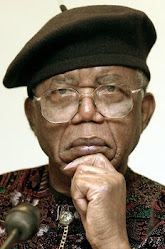
SLM: It took a long time to find a publisher for In Dependence. There were many rejections along the way, and I had to learn (and continue to learn) how to deal with disappointment. And so the first tip that I would give any writer is not to get too discouraged by rejections for it happens to all writers. I would also encourage writers to write first and foremost for themselves, and only when they have worked and reworked their writing to think about sending it out. Writing takes a huge amount of time and patience. I think Achebe put it very well in his essay Empire Fights Back, when he said: “For me there are three reasons for becoming a writer. The first is that you have an overpowering urge to tell a story. The second, that you have intimations of a unique story waiting to come out. And the third, which you learn in the process of becoming, is that you consider the whole project worth the considerable trouble – I have sometimes called it terms of imprisonment – you will have to endure to bring it to fruition.”
5. Today parents still live in fear of children they send out returning with foreign women, it is something they dread. Do you think foreign and local attitudes towards interracial marriages have changed significantly since the sixties?
SLM: Yes, I do think attitudes towards interracial marriages have changed and certainly the numbers of interracial marriages seem higher than in the past. In this day and age though, when fewer and fewer marriages seem to last (irrespective of the background of the individuals involved) I think it has become quite clear that any marriage can be challenging.
SLM: It took a long time to find a publisher for In Dependence. There were many rejections along the way, and I had to learn (and continue to learn) how to deal with disappointment. And so the first tip that I would give any writer is not to get too discouraged by rejections for it happens to all writers. I would also encourage writers to write first and foremost for themselves, and only when they have worked and reworked their writing to think about sending it out. Writing takes a huge amount of time and patience. I think Achebe put it very well in his essay Empire Fights Back, when he said: “For me there are three reasons for becoming a writer. The first is that you have an overpowering urge to tell a story. The second, that you have intimations of a unique story waiting to come out. And the third, which you learn in the process of becoming, is that you consider the whole project worth the considerable trouble – I have sometimes called it terms of imprisonment – you will have to endure to bring it to fruition.”
5. Today parents still live in fear of children they send out returning with foreign women, it is something they dread. Do you think foreign and local attitudes towards interracial marriages have changed significantly since the sixties?
SLM: Yes, I do think attitudes towards interracial marriages have changed and certainly the numbers of interracial marriages seem higher than in the past. In this day and age though, when fewer and fewer marriages seem to last (irrespective of the background of the individuals involved) I think it has become quite clear that any marriage can be challenging.
6. When I look around I see very few prominent females in Nigerian literature. In the days of Achebe, Soyinka, Ekwensi and many other well-known male writers, we had only a few prominent female writers like Buchi Emecheta and Flora Nwapa. More recently we have names like Ben Okri, Jude Dibia, Helon Habila, Chris Abani, Uwem Akpan and many other male writers who have made their mark. The only other female writer just as easily recognized is Chimamanda Adichie. Why do you think our women are not writing their own stories? What do you think should be done to draw them out?
SLM: I would agree that in the 1960s there were few prominent females in Nigerian literature, but today the number of Nigerian women novelists is greater than you might think. Take for example, Sefi Atta, Chika Unigwe, Adaobi Nwaubani, Helen Oyeyemi, Unoma Azuah and Lola Shoneyin, to name but a few. What is also exciting is to see some of our male writers writing strong female characters.
SLM: I would agree that in the 1960s there were few prominent females in Nigerian literature, but today the number of Nigerian women novelists is greater than you might think. Take for example, Sefi Atta, Chika Unigwe, Adaobi Nwaubani, Helen Oyeyemi, Unoma Azuah and Lola Shoneyin, to name but a few. What is also exciting is to see some of our male writers writing strong female characters.
7. The Nigerian publishing industry is not doing well. There are few healthy publishing houses and many struggling writers who are frustrated and “throwing in the pen” in resignation. A lot are turning to self-publishing and there are only a few success stories. What do you think can be done to help our ailing industry? How do you think successful writers can help?
SLM: I think that the biggest thing that we can all do to help the ailing industry is to buy more books. If people don’t buy books, publishing houses cannot survive. It’s as simple as that. If local publishers are not supported, then American and European publishing houses will continue to dictate who and what gets published. There was a time when people complained about the poor production quality of local presses, but I’m happy to say that the production quality and editing done by my Nigerian publishers rivals that of any European or American publisher. Cassava Republic Press is doing a phenomenal job in producing really high quality books in all genres – children’s books, short stories, and novels so that there should be something that will appeal to any reader. As you can see, I’m extremely proud of my publisher and hope that readers will support them and other fledgling publishers in Nigeria.
8. Not enough is being done to encourage arts and writing. Not enough is being done to bring young ones into the industry and fine-tune their skills. How do you think that can be remedied?
SLM: What you are doing on your blog is great – thank you! I would encourage each of us to support the arts and artists in whatever way we can. For some this might mean buying more books, for others this might mean encouraging schools and universities to think about adding new writers to their curriculum, for others it might mean featuring writers and artists on their blogs and writing reviews, for others it might mean mentoring young writers. There are endless ways that we can all help even more than we already do. Although there is still so much to be done, I’m very optimistic that things are beginning to move in the right direction.
9. This book is bound to leave an impression on readers and get them thinking. Do you have any interesting feedback from readers you can share with us?
SLM: The very first email that I received on my website still makes me smile. It came from Lagos and went something like this …
Dear Sarah
Your book sounds interesting but please, what I REALLY want to know is where you bought your necklace.
But on a more serious note, I’ve been very touched by the emails I’ve received from readers who have found something that spoke to them in the novel. Quite a few readers have said that they would like to see the book turned into a film.
10. Whose works do you read most frequently?
SLM: Having grown up in different parts of Africa (Nigeria and Kenya), I have always been drawn by stories set in the continent, and now that I live abroad I find myself particularly drawn to immigrant stories. I have, for example, always loved the work of Sembene Ousmane (film, short stories and novels). Another favourite writer is James Baldwin who writes clearly and simply with a keen eye for detail, a deep understanding of history and a subtle sense of humour. I am drawn to many of Chinua Achebe’s essays for the same reasons as well as to Teju Cole’s new and brilliant work, Every Day is for the Thief. Recently, I’ve been reading and enjoying more short stories. I love the social satire in Edith Wharton’s stories, just as I love the eye for the diasporic in Jhumpa Lahiri and Rishi Reddi’s work and the startling innovativeness of Haruki Murakami. I am increasingly drawn to women writers, returning to writers such as Virginia Woolf and Mariama Ba and discovering newer writers such as Marilyn Robinson, Laila Lalami and Petina Gappah.
11. What do you think about life, love and music?
SLM: Life, love and music … where does one start?! I’ll take the easy way out and say that if a reader wants a glimpse into some of my thoughts on all of the above, they can start with my novel and short stories. But I’m particularly glad you brought up the subject of music because music features quite prominently in In Dependence and few people have asked about it. One of the beauties of the period that I was writing about was that it brought together such incredible musical talent ranging from Sarah Vaughan to Fela Kuti and Miriam Makeba, all of which feature in the novel.
SLM: I think that the biggest thing that we can all do to help the ailing industry is to buy more books. If people don’t buy books, publishing houses cannot survive. It’s as simple as that. If local publishers are not supported, then American and European publishing houses will continue to dictate who and what gets published. There was a time when people complained about the poor production quality of local presses, but I’m happy to say that the production quality and editing done by my Nigerian publishers rivals that of any European or American publisher. Cassava Republic Press is doing a phenomenal job in producing really high quality books in all genres – children’s books, short stories, and novels so that there should be something that will appeal to any reader. As you can see, I’m extremely proud of my publisher and hope that readers will support them and other fledgling publishers in Nigeria.
8. Not enough is being done to encourage arts and writing. Not enough is being done to bring young ones into the industry and fine-tune their skills. How do you think that can be remedied?
SLM: What you are doing on your blog is great – thank you! I would encourage each of us to support the arts and artists in whatever way we can. For some this might mean buying more books, for others this might mean encouraging schools and universities to think about adding new writers to their curriculum, for others it might mean featuring writers and artists on their blogs and writing reviews, for others it might mean mentoring young writers. There are endless ways that we can all help even more than we already do. Although there is still so much to be done, I’m very optimistic that things are beginning to move in the right direction.
9. This book is bound to leave an impression on readers and get them thinking. Do you have any interesting feedback from readers you can share with us?
SLM: The very first email that I received on my website still makes me smile. It came from Lagos and went something like this …
Dear Sarah
Your book sounds interesting but please, what I REALLY want to know is where you bought your necklace.
But on a more serious note, I’ve been very touched by the emails I’ve received from readers who have found something that spoke to them in the novel. Quite a few readers have said that they would like to see the book turned into a film.
10. Whose works do you read most frequently?
SLM: Having grown up in different parts of Africa (Nigeria and Kenya), I have always been drawn by stories set in the continent, and now that I live abroad I find myself particularly drawn to immigrant stories. I have, for example, always loved the work of Sembene Ousmane (film, short stories and novels). Another favourite writer is James Baldwin who writes clearly and simply with a keen eye for detail, a deep understanding of history and a subtle sense of humour. I am drawn to many of Chinua Achebe’s essays for the same reasons as well as to Teju Cole’s new and brilliant work, Every Day is for the Thief. Recently, I’ve been reading and enjoying more short stories. I love the social satire in Edith Wharton’s stories, just as I love the eye for the diasporic in Jhumpa Lahiri and Rishi Reddi’s work and the startling innovativeness of Haruki Murakami. I am increasingly drawn to women writers, returning to writers such as Virginia Woolf and Mariama Ba and discovering newer writers such as Marilyn Robinson, Laila Lalami and Petina Gappah.
11. What do you think about life, love and music?
SLM: Life, love and music … where does one start?! I’ll take the easy way out and say that if a reader wants a glimpse into some of my thoughts on all of the above, they can start with my novel and short stories. But I’m particularly glad you brought up the subject of music because music features quite prominently in In Dependence and few people have asked about it. One of the beauties of the period that I was writing about was that it brought together such incredible musical talent ranging from Sarah Vaughan to Fela Kuti and Miriam Makeba, all of which feature in the novel.
12. Why don’t you have a Facebook account?
SLM: What a great question! There is a Facebook fan page for In Dependence that was kindly started by a reader and yet, you are right to notice that I’m not on Facebook. I am very tempted to join, but I fear that if I join it will be just one more excuse to keep me away from writing. I already spend far too much time on line, hence why I have not joined Facebook … not yet ;)
Author's website
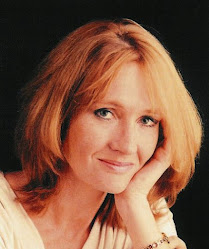
Author image
Author biography
Book cover image
SLM: What a great question! There is a Facebook fan page for In Dependence that was kindly started by a reader and yet, you are right to notice that I’m not on Facebook. I am very tempted to join, but I fear that if I join it will be just one more excuse to keep me away from writing. I already spend far too much time on line, hence why I have not joined Facebook … not yet ;)
Author's website
Author image
Author biography
Book cover image





 Posts
Posts